

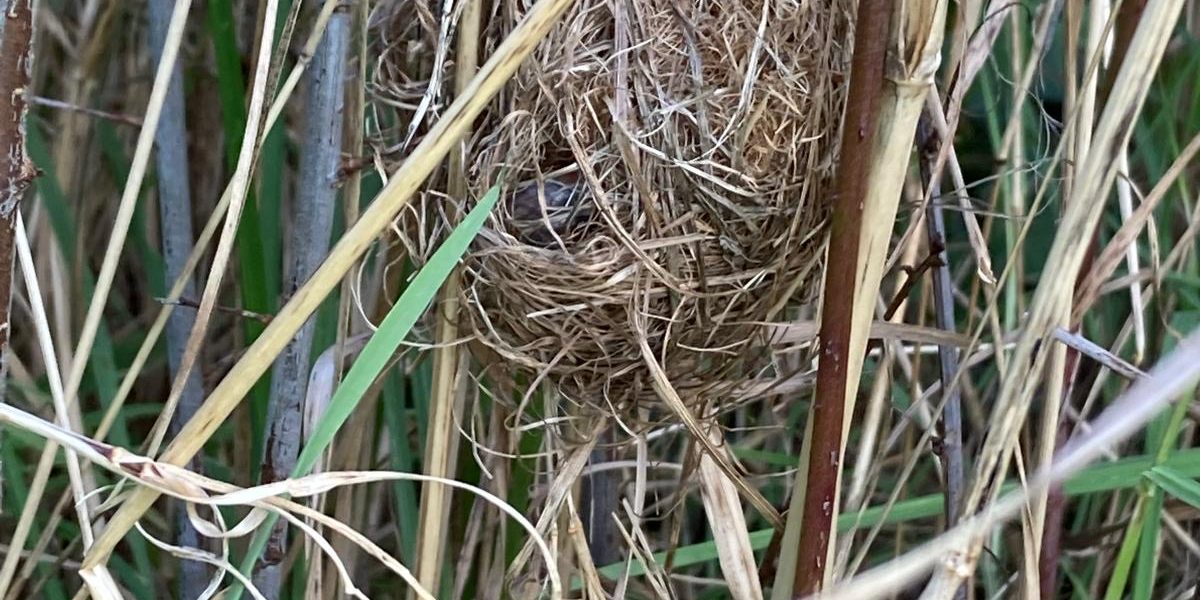
Kindly shared by Jonny Purchase, Badbury Rings Farmer Cluster from a collaborative cluster event:
Sarah Butcher, harvest mouse expert from Devon Mammal Group, gave some members from the farmer cluster groups of Badbury Rings, Cranborne Chase and Mid Stour Valley a highly engaging and interactive presentation on these wonderful creatures:
- What are harvest mice
- How to identify harvest mice
- Habits and habitats
- Diet, predators and threats
- Details on nests and how to look for and identify them
- How to record searches
With about 25 people in attendance, we started in the Crab Shoot room with a presentation from Sarah. Despite the ‘harvest’ reference in their name we learned that they prefer tussocky grass margins to build their nests. Sarah brought a couple of nests with her for us to look at (think the size of a tennis ball, made of grass with a small hole in it and they spring back to shape after you squeeze them) as well as three live mice too as special guests; they really are tiny.
Harvest mice generally live for about a year, or 18 months at best, so they have no time for hibernating and they rely on these tussocky margins to breed as they can protect themselves from predators that way, at least in part. They also like tree guards so if you are planting any new trees keep an eye out around the base of those. Sarah’s presentation also provided some guidance on how to spot their nests and how to record them if you find any. It’s important any monitoring is recorded so more can be learned about their habitats and locations.
Speaking of spotting nests, after a delicious pasty lunch, we headed out to our meadows to see if we could find any. A quick walk along a track and into some of the fields yielded great results with six nests spotted by various people including some in situations (in nettles) that Sarah had not seen before. Before we left to go home, Sarah gave us a quick tutorial on how to search through tussocky grasses to try and find these nests (there were none there specifically but we did find evidence of field voles instead!). I am hoping we can plan a more detailed session soon to see how many nests we can find if we look properly as it feels like there may be plenty around now we know what we’re looking for, thanks to Sarah’s excellent presentation and workshop. If you find any nests in your margins too, please report them to the Devon Mammal Group.